Think Bright: Positive Thinking Reading Guide & 7-Day Plan
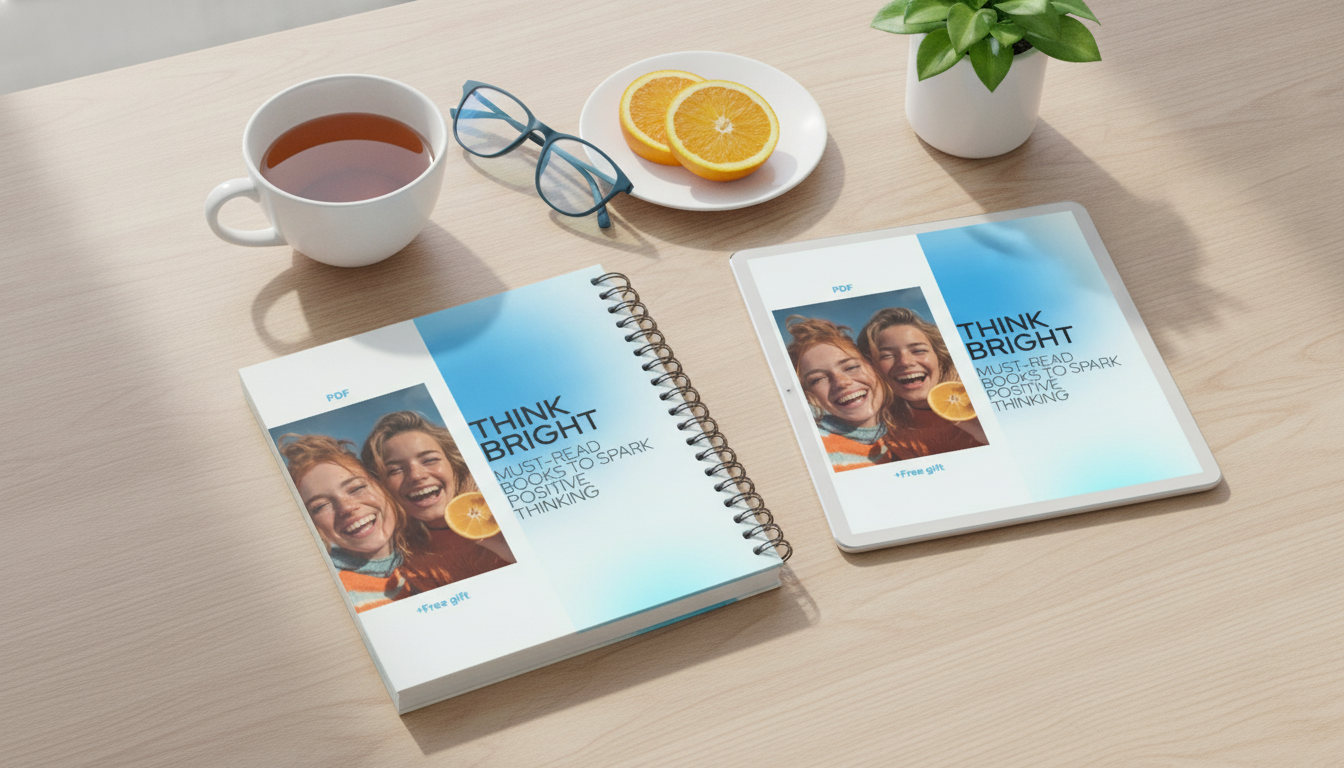
Think Bright: A Digital Reading Guide to Spark Positive Thinking
Positive thinking isn’t about pretending everything is fine. It’s about building a steadier mindset, strengthening self-talk, and practicing small habits that make hard days easier to handle. When you have a clear reading path—and simple ways to apply what you learn—uplifting books become more than inspiration. They become a practical toolkit.
Think Bright: Must-Read Books to Spark Positive Thinking (Digital Download) organizes recommended reads into an actionable, screen-friendly guide so the next right book feels obvious, supportive, and motivating—without endless searching.
What this digital download includes
- A curated list of must-read titles focused on optimism, resilience, gratitude, mindset, and personal growth
- A simple framework for choosing a book based on what needs support right now (confidence, stress, motivation, boundaries, or hope)
- Quick-use prompts to turn reading into daily practice (reflection, journaling, habit cues, and action steps)
- A lightweight format designed for screens and printing, suitable for a phone, tablet, or binder
To make the routine feel inviting, pair reading time with a calming sensory cue—many readers like lighting incense as a “start signal.” A simple option is the Sandalwood Backflow Incense Burner for a calming reading ritual, especially for evening wind-down sessions.
How positive-thinking books help (when used the right way)
- They strengthen cognitive reframing: noticing unhelpful thought patterns and replacing them with more realistic, supportive perspectives
- They build emotional vocabulary, making it easier to name feelings and respond thoughtfully rather than react impulsively
- They reinforce identity-based habits: small consistent actions that align with the person being built, not just goals being chased
- They offer repeatable tools (prompts, exercises, and models) that are easier to use than vague motivational advice
Research-backed fields like positive psychology and gratitude studies show how strengths, meaning, and appreciation practices can support well-being over time when they’re practiced consistently, not just read once. For deeper context, see American Psychological Association — Positive Psychology and Greater Good Science Center — Gratitude.
Choose the right book for the moment
- For stress and overwhelm: pick books that emphasize nervous system regulation, mindful attention, and simplifying commitments
- For low motivation: prioritize titles built around tiny habits, consistency, and overcoming friction rather than “willpower”
- For self-criticism: choose compassionate, evidence-based approaches to self-talk and acceptance
- For big transitions: look for books on resilience, meaning-making, and values-driven decisions
- For relationships: select reads focused on boundaries, communication, and empathy
Common goals and what to look for in a book
| What needs support | Best-fit book themes | Try this after each chapter |
|---|---|---|
| Anxiety or overwhelm | Mindfulness, stress skills, calming routines | Write one worry and one controllable next step |
| Confidence | Growth mindset, self-compassion, strengths | List one win and one skill to practice tomorrow |
| Motivation | Habits, consistency, behavior design | Choose one 2-minute action and schedule it |
| Optimism | Gratitude, hope, cognitive reframing | Identify a negative thought and rewrite it more realistically |
| Resilience | Coping skills, meaning, perseverance | Note one lesson learned and one support to ask for |
A simple 7-day reading routine that keeps momentum
- Day 1: Pick one theme (calm, confidence, motivation, hope) and select a matching title from the guide
- Day 2: Read 10–15 minutes and capture one sentence worth remembering
- Day 3: Turn one idea into a micro-habit (so the book shows up in daily life)
- Day 4: Use a “thought audit” page: what thought shows up often, and what’s a kinder alternative?
- Day 5: Share one takeaway with a friend or journal it as a letter to future self
- Day 6: Re-read highlighted parts and choose one practice to repeat for the next week
- Day 7: Reflect on changes in mood, self-talk, or decisions; then choose the next theme
This approach is intentionally small-batch: short reading sessions, quick capture, and one behavior to test. That’s often where “positive thinking” becomes real—when the ideas show up in conversations, choices, and recovery time after setbacks.
Make inspirational reading stick: practical tools
- Use “one-page summaries”: after finishing a chapter, capture the main idea, one example, and one action
- Try a cue-based approach: attach reading to an existing habit (morning coffee, lunch break, bedtime routine)
- Keep friction low: store the download where it’s instantly accessible and pre-select the next reading session
- Create a “proof list”: collect evidence of progress (small wins) to counter all-or-nothing thinking
- Balance inspiration with realism: replace toxic positivity with grounded optimism and problem-solving
If mindfulness is part of your reading plan, it helps to rely on credible guidance about what it can (and can’t) do. The National Institutes of Health (NCCIH) — Meditation and Mindfulness overview is a solid reference for benefits and safety.
Who this guide is best for
It can also help households where a calmer routine supports everyone. If your environment includes energetic pets, planning small daily rhythms can make a difference—some people like pairing reading breaks with home-enrichment routines such as Enrichment Ideas for Indoor Cats to create a calmer home routine.
Download details and what to expect
FAQ
Is positive thinking the same as ignoring negative emotions?
No—grounded optimism starts by acknowledging what you feel and what’s happening. The goal is to respond with helpful interpretations and actions, rather than getting stuck in harsh self-talk or worst-case assumptions.
How much time is needed each day to benefit from the guide?
About 10–20 minutes is enough for most people, especially when it’s consistent. Even a quick routine—read 10 minutes, write one takeaway, choose one small action—can build momentum.
Can the digital download be printed?
Yes. Printing selected pages (like the reading plan, prompts, or a weekly routine) is a practical option if you prefer a binder, while keeping the full guide on your phone or tablet for easy access.
















Leave a comment