Helping Kids Build Confidence: Routines, Scripts & Skills
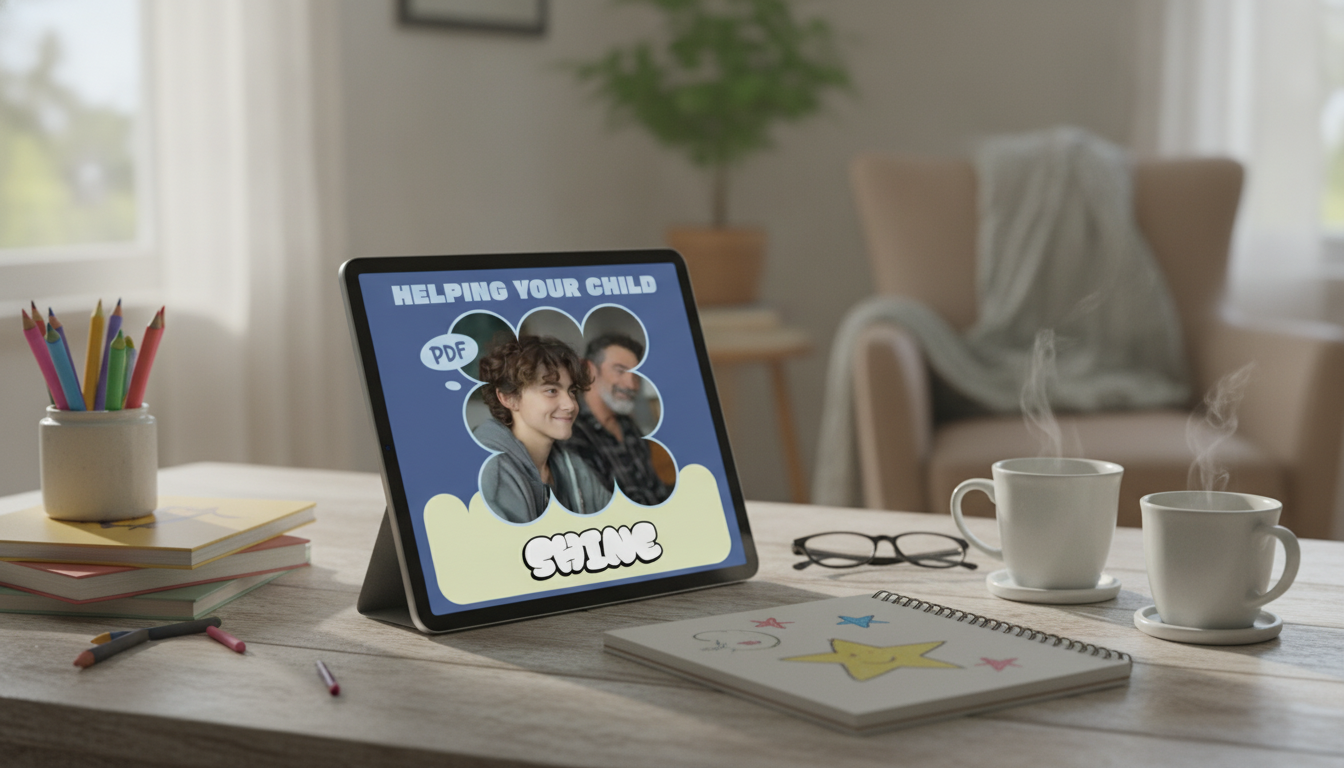
Helping Your Child Shine: A Practical Confidence-Building Guide for Kids
Confidence grows through small, repeatable experiences: being understood, trying something new, making mistakes safely, and noticing progress. The goal isn’t a child who never feels nervous—it’s a child who can feel nervous and still take a next step. Below are practical routines and parent-friendly phrases that help kids feel capable, resilient, and comfortable being themselves at home, at school, and with friends.
What Confidence Looks Like at Different Ages
Confidence changes as children develop, and it often shows up in uneven bursts. Look for patterns over time rather than one “good day” or one rough week.
- Ages 3–5: Willingness to try, naming feelings, handling brief separation, recovering from small frustrations.
- Ages 6–9: Taking responsibility for small tasks, joining group play, attempting homework independently, tolerating correction.
- Ages 10–12: Speaking up respectfully, managing friendships, setting personal goals, bouncing back from mistakes.
- Teens: Identity exploration, self-advocacy, healthy risk assessment, persistence through setbacks.
If a child seems confident in one setting (sports) but shuts down in another (school presentations), that’s still normal. Confidence is context-specific, and it can be strengthened one situation at a time.
Common Confidence Traps (and What Helps Instead)
- Over-rescuing: Stepping in too quickly can unintentionally teach “I can’t.” Try coaching first (“What’s your plan?”), then support if needed.
- Labeling (“shy,” “smart,” “lazy”): Fixed labels can narrow identity. Replace labels with observable facts: “You took your time to warm up,” or “You stuck with it.”
- Comparison culture: Ranking against peers often fuels anxiety. Shift the focus to personal growth: “What’s one thing you can do a little better than last time?”
- Perfection pressure: Kids learn confidence by surviving mistakes. Praise strategies and persistence, not flawless outcomes.
- Inconsistent boundaries: Predictable limits create safety. Clear expectations make it easier for kids to take age-appropriate risks and responsibility.
Confidence-Building Skills to Practice Weekly
Confidence grows fastest when it’s trained like a skill. Choose one area each week, practice briefly most days, then reflect together.
- Emotional literacy: Help kids name feelings and needs (“frustrated,” “nervous,” “proud,” “left out”). Naming reduces overwhelm.
- Problem-solving: Keep it simple: pause, define the problem, brainstorm options, choose one, reflect.
- Self-talk: Teach a supportive inner voice: “I can try again,” “I can ask for help,” “I don’t have to be perfect to improve.”
- Body-based calm: Breathing, grounding, stretching, or a short walk can reset the nervous system before a challenge.
- Social confidence: Role-play greetings, joining play, handling teasing, and asserting boundaries.
Quick Routine: From Worry to Action (5–10 minutes)
| Moment | What the child does | What the parent says | Why it builds confidence |
|---|---|---|---|
| Before a challenge | Names the feeling and rates it 1–10 | “It makes sense to feel nervous. What number is it?” | Validates emotions without stopping growth |
| Make a plan | Chooses one small next step | “What’s the smallest step you can do first?” | Creates achievable momentum |
| Try | Attempts the step for 2 minutes | “Try for two minutes, then we’ll check in.” | Builds tolerance for discomfort |
| Reflect | Notes one thing that helped | “What worked even a little?” | Reinforces learning and agency |
| Celebrate | Acknowledges effort | “You showed courage by trying.” | Links confidence to actions, not outcomes |
Supportive Language That Builds a Strong Inner Voice
The words kids hear repeatedly become the words they learn to say to themselves.
Helping Kids Handle Mistakes, Criticism, and Setbacks
For additional guidance on social-emotional development and parenting supports, visit HealthyChildren.org by the American Academy of Pediatrics and the CDC child development resources.
Confidence at Home: Routines That Make Kids Feel Capable
Confidence at School and With Friends
A Printable Guide for Building Confidence (What’s Inside)
If it helps to have ready-to-use prompts and routines in one place, Helping Your Child Shine – confidence-building guide for kids (download) is designed for practical, busy-day parenting. It includes short exercises for emotion coaching, brave practice, and positive self-talk, plus age-appropriate ideas for responsibilities and independence-building checklists.
To support a calm “practice first” atmosphere at home, some families also like small environmental cues that signal wind-down time before homework or tough conversations, such as the Sandalwood Backflow Incense Burner – Alpine Flowing Water Aromatherapy. And for on-the-go routines (library trips, sports, or carrying school essentials), a durable carryall like the Lightweight Waterproof Down Tote Bag can make transitions smoother.
Download: Helping Your Child Shine
The Helping Your Child Shine digital parenting download focuses on confidence-building for kids and is useful for parents, caregivers, and educators who want a clear plan. It’s priced at $11.99 (USD) and is available instantly after purchase when in stock.
FAQ
How can a parent help a child build confidence without pressuring them?
Keep challenges small and predictable, validate feelings, and praise effort and strategies rather than outcomes. Offer choices within firm boundaries so your child feels both safe and capable.
What are simple confidence-building activities for kids at home?
Use meaningful chores, create “practice zones” for skills like cooking or crafts, role-play social situations, and protect a short daily 1:1 connection time. Add one small weekly goal and a quick reflection to help your child notice progress.
When should low confidence be a concern?
If avoidance, distress, or harsh self-criticism regularly interferes with school, friendships, sleep, or daily routines, it’s time to seek support. A pediatrician or licensed mental health professional can help clarify what’s going on and what tools will help.
















Leave a comment