28mm F5.6 Manual Lens: Street & Travel Zone Focus
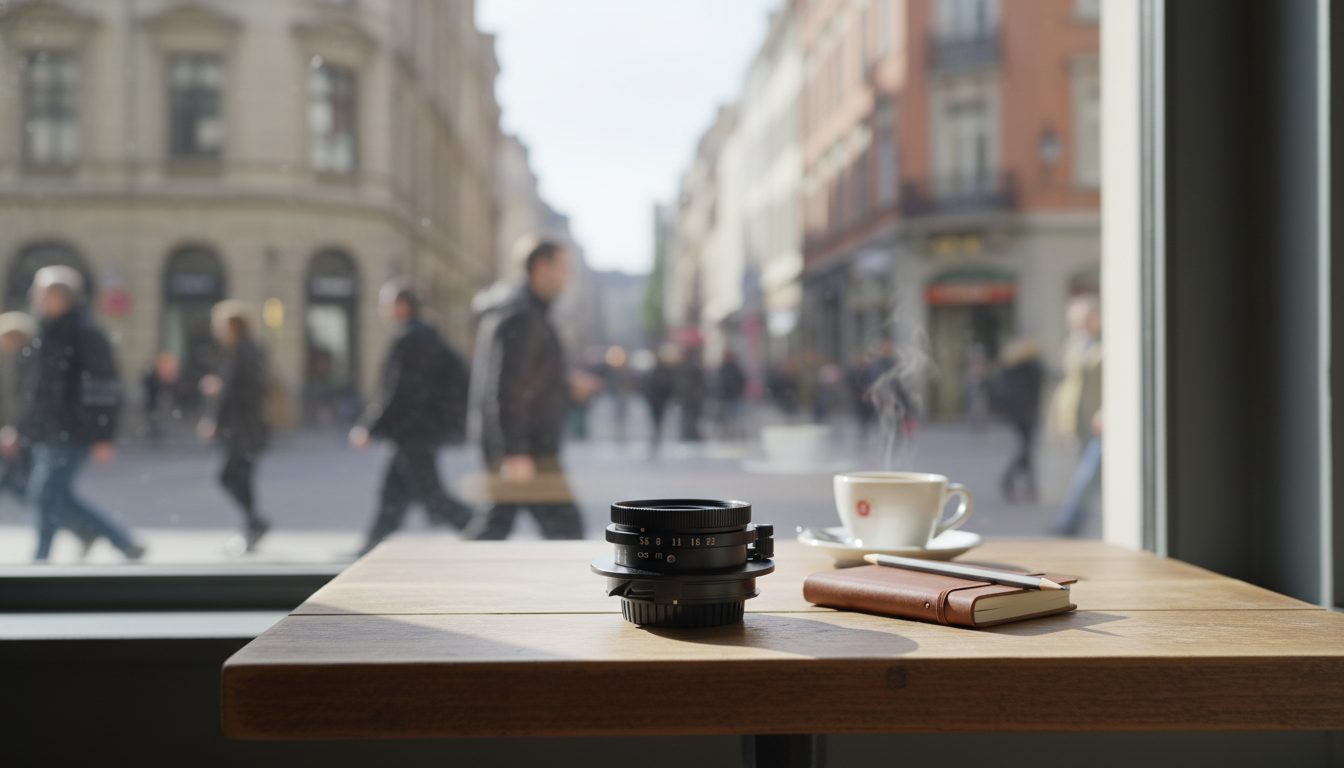
A compact 28mm prime with a fixed F5.6 aperture suits fast-moving street scenes and lightweight travel kits. Manual focus encourages deliberate framing, hyperfocal techniques, and quieter shooting in crowded places, while the wide field of view helps capture context without feeling exaggerated. For more guidance, see Nikon Df Review by Digital Darrell – Nikonians.
What this 28mm F5.6 lens is best at
- Everyday street coverage: Wide enough for environmental shots, tight enough to avoid extreme distortion when you keep the camera level.
- Travel storytelling: Great for markets, architecture details with surrounding context, and quick walk-and-shoot sequences.
- Discreet shooting style: Manual focus and a compact profile draw less attention than larger autofocus zooms.
- Consistency and simplicity: A fixed aperture keeps decisions focused on light, ISO, and distance rather than constant setting changes.
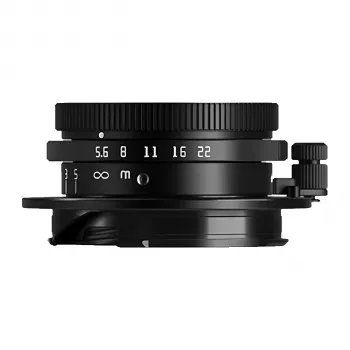
If you want a small “leave-it-on” wide prime built around deliberate shooting, the 28mm F5.6 Full Frame Manual Focus Lens for Street & Travel Photography is a clean match for that workflow. For further reading, see Find a Lens | Micro Four Thirds.
Key specifications to know before buying
- Focal length: 28mm on full frame delivers a natural wide perspective for street and travel compositions.
- Aperture: Fixed F5.6 favors depth of field and (often) strong sharpness, but you’ll rely more on available light or higher ISO at night.
- Focus type: Manual focus—expect to use distance-scale techniques, focus peaking, or magnified view on mirrorless bodies.
- Full-frame coverage: Designed for full-frame sensors; it can also be used on APS-C with a tighter, “less wide” effective angle of view.
Quick spec snapshot
| Feature | What it means for street & travel |
|---|---|
| 28mm focal length | Captures context and surroundings; good for close, immersive scenes |
| Fixed F5.6 | Deep depth of field for zone focusing; less suited to low-light motion without higher ISO |
| Manual focus | Fast once set for hyperfocal/zone distances; slower for near subjects if distances change constantly |
| Full-frame coverage | Widest view on full frame; becomes a “normal-ish” wide on crop sensors |
Handling and setup for fast street shooting
- Set a baseline exposure: Use aperture-priority or manual exposure with Auto ISO so you can react quickly as light changes.
- Enable focus aids: Turn on focus peaking and assign a magnifier button for quick confirmation when time allows.
- Use the distance scale (if present): Pre-set focus to a chosen distance and shoot without refocusing when moments pass quickly.
- Keep the camera level for buildings: This reduces keystone distortion; step back instead of tilting up when possible.
For long days on foot, comfort and quick access matter as much as settings. A simple carry option like the Lightweight Waterproof Down Tote Bag can help keep your camera reachable without turning your travel kit into a burden.
Practical focusing methods: zone and hyperfocal distances
- Zone focus for street: Choose a distance range where most subjects will fall (for example, 2–5 meters) and shoot instantly.
- Hyperfocal approach: Set focus so depth of field stretches from near-mid distance to infinity—handy for travel scenes, cityscapes, and architecture.
- Close-subject strategy: For subjects within 1–2 meters, use peaking/magnification to avoid missed focus. F5.6 is forgiving, but it’s not unlimited.
- Motion and shutter speed: Prioritize a shutter speed that freezes walking subjects; raise ISO rather than risking blur.
Suggested street setup starting points
| Scenario | Focus approach | Exposure priority |
|---|---|---|
| Daytime streets | Zone focus around mid-distance | 1/250s or faster; Auto ISO |
| Markets/indoor shade | Zone focus closer; confirm with peaking | 1/250s; raise ISO as needed |
| Architecture and travel scenes | Near-hyperfocal to infinity | Stabilize stance; watch highlights |
| Night streets | Confirm focus with magnification | 1/125–1/250s; higher ISO; consider stabilization if available |
To dig deeper into how depth of field behaves as distance changes (the foundation of zone focus), see Cambridge in Colour’s guide to Depth of Field, and their walkthrough on Hyperfocal Distance.
Image character and composition tips at 28mm
- Use the edges intentionally: Wide lenses include more than expected—scan corners and borders for distractions before you press the shutter.
- Get closer for impact: 28mm looks best when the subject is near and the background supports the story instead of competing with it.
- Watch perspective: Faces and near objects can stretch if you get too close; step back slightly for more natural proportions.
- Panoramas and travel landscapes: Overlapping frames at 28mm stitch well, especially if you keep vertical lines straight while shooting.
Who this lens fits (and who should consider a different approach)
Travel carry and protection tips
FAQ
Is a fixed F5.6 aperture limiting for street photography?
It can be limiting in very low light, but F5.6 is excellent for deep depth of field and zone focusing, which helps you capture quick moments without constant refocusing. Set a shutter-speed target and let Auto ISO handle brightness to keep motion sharp.
How can manual focus be fast enough for street shooting?
Pre-setting focus for a “working distance” is the key: use zone focusing or a hyperfocal-style setup so most subjects fall within acceptable sharpness. Focus peaking and quick magnification are best saved for closer shots where precision matters more.
Is 28mm a good travel focal length on full frame?
Yes—28mm balances subject prominence with a strong sense of place, making it useful for streets, interiors, and architecture. Keep the camera level to manage perspective, and step back rather than tilting up whenever you want straighter vertical lines.














Leave a comment