Sturdy 5-Tier Cat Tree Tower for Large Cats
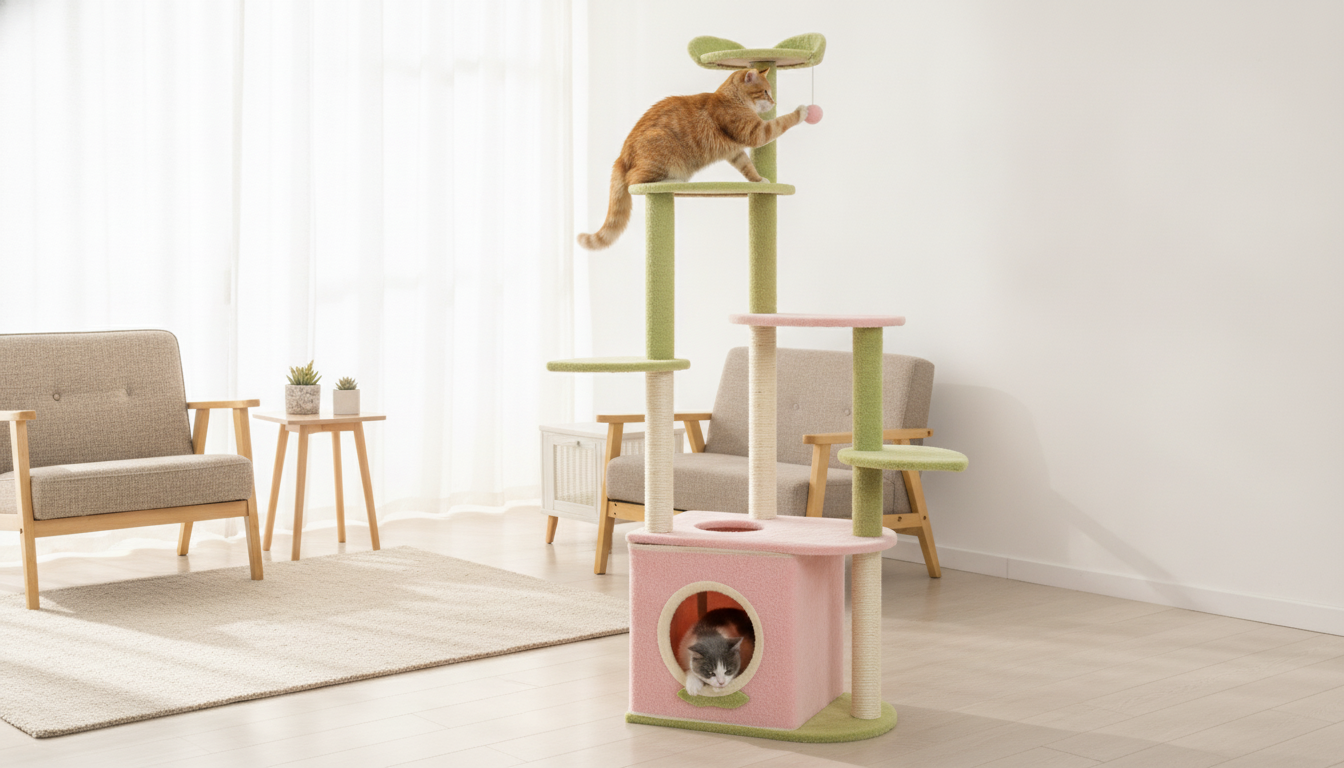
5-Tier Cat Tree Tower for Large Cats: Activity Center with Scratching Posts
A tall, multi-level cat tree can turn vertical space into a daily routine of climbing, scratching, lounging, and observation—especially for larger cats that need sturdy platforms and stable support. A well-designed 5-tier tower supports natural feline behaviors while helping keep indoor life active, calmer, and more organized (for both cats and furniture).
What a 5-tier activity tower adds to a cat’s day
Cats experience a room in three dimensions. A 5-tier layout makes “up” usable, which can noticeably change how a cat rests, plays, and moves through the home.
- Vertical territory: Multiple levels reduce crowding and give cats options—nap low, perch high, or observe from mid-levels.
- Healthy movement: Repeated climbing and controlled jumping add everyday activity for indoor cats.
- Scratching outlets: Posts provide an appropriate surface that can redirect clawing away from sofas and doorframes.
- Decompression zones: Upper tiers often become quiet resting spaces away from household traffic.
- Multi-cat harmony: Tiered pathways can reduce tension by offering separate perches and “passing lanes.”
For general behavior and scratching guidance, the ASPCA’s cat behavior resources are a helpful reference point.
Who benefits most: large cats, multi-cat homes, and busy households
A 5-tier tower works for many cats, but it shines in homes where space, energy, or social dynamics make vertical structure especially valuable.
- Large or heavy cats: Prioritize generous platforms and a base that resists wobble during climbs, turns, and “launches.”
- Kittens and young adults: A tiered tower becomes a safe, repeatable place to burn energy indoors.
- Senior cats: Lower platforms can serve as steps if the layout allows gradual climbing instead of big leaps.
- Multi-cat households: More tiers help distribute favored spots for sleeping, lookout duty, and scratching.
- Apartments or limited floor space: A taller tower increases usable territory without expanding the footprint.
For broader indoor health considerations—weight, mobility, and routine care—Cornell’s Feline Health Center is a reliable source.
Key features to look for in a sturdy, cat-friendly tower
Not all tall cat trees feel stable to a big cat. The most-used towers tend to be the ones that feel predictable underfoot and comfortable at rest.
- Stability: A wider base, strong vertical supports, and secure joints reduce rocking during play.
- Platform size and spacing: Larger cats need room to turn around and lie fully supported; spacing should allow confident jumps.
- Scratching surfaces: Sisal or textured wrap encourages use; multiple posts help prevent “traffic jams.”
- Resting options: Perches, condos, or lounges provide choices for privacy vs. visibility.
- Materials and comfort: Soft, low-shed coverings and easy-to-spot-clean surfaces make upkeep easier.
- Safety details: Rounded edges, tight fabric, and well-secured attachments reduce snagging and tipping risk.
Quick checklist for evaluating a 5-tier cat tower
| What to check | Why it matters | Simple test at home |
|---|---|---|
| Base width and weight | Reduces tipping for big jumps and heavier cats | Gently push from the side; it should resist rocking |
| Platform size | Supports full-body lounging without overhang | Cat should be able to turn and lie down comfortably |
| Tier spacing | Makes climbing confident and reduces missteps | Observe whether the cat hesitates or slips between levels |
| Number and placement of scratching posts | Increases use and prevents queueing in multi-cat homes | Encourage scratching with treats; see if multiple cats can use it |
| Fasteners and joints | Prevents loosening over time | Re-tighten after a week; check monthly thereafter |
Placement tips that make cats actually use it
Even a great tower can be ignored if it’s tucked into a dead zone. Placement should match what cats already enjoy: light, views, and proximity to their people.
- Near a window: A view turns a top perch into daily “watch duty” (birds, people, weather).
- Close to where the household gathers: Many cats prefer being near activity rather than isolated.
- Keep walkways clear: Easy access prevents the tower from becoming a nuisance or being bumped.
- Create a landing zone: Add a small rug or mat to reduce slipping and catch shedding.
- Add familiar scent: Rub a soft cloth on your cat’s cheeks and wipe it on a favorite perch.
For additional home setup and care guidance, the Humane Society’s cat care resources offer practical tips.
Getting cats interested: simple ways to build a habit
If you want a structured routine with quick DIY options, pair the tower with Enrichment Ideas for Indoor Cats | Printable Cat Enrichment Guide | DIY Toys, Play Routines, and Cat-Friendly Home Tips for easy rotation without buying a pile of extra gear.
Assembly, safety, and long-term upkeep
Product spotlight: 5-Tier Cat Tree Tower for Large Cats – Activity Center with Scratching Posts
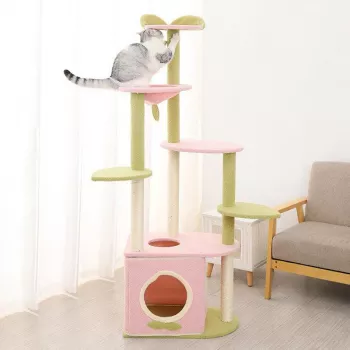
For households that want one main “hub” for climbing, lounging, and scratching, 5-Tier Cat Tree Tower for Large Cats – Activity Center with Scratching Posts is designed to provide multiple levels for daily movement and several scratching zones to channel clawing behavior.
FAQ
How tall should a cat tree be for a large cat?
Aim for a height that provides at least one elevated lookout level, but prioritize stability and platform size over maximum height. Large cats do best when they can climb confidently between tiers and fully rest without hanging off the edges.
How do you keep a tall cat tree from tipping?
Place it on level flooring, tighten hardware regularly, and avoid positioning it where it gets bumped in traffic lanes. For high-energy jumpers or heavier cats, a wide base and manufacturer-approved anchoring can add extra security.
How can a cat be trained to use scratching posts on the tower?
Start by placing the tower near the current scratching spot, then reward any scratching with treats or praise. Use catnip if your cat responds, and gently redirect from furniture by moving the cat to the post—without punishment.













Leave a comment