Stop Freezing on YouTube: Simple On-Camera Confidence
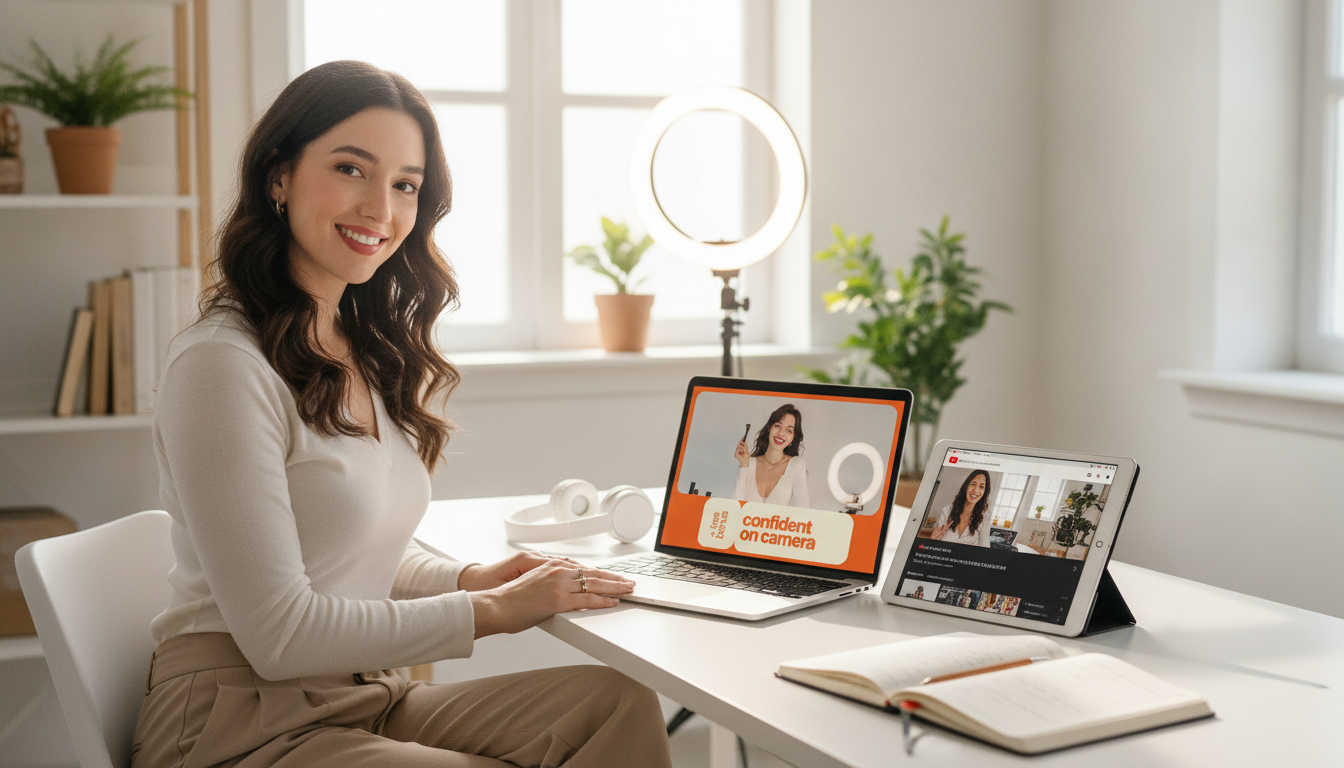
Confident on Camera: A Practical Breakthrough for YouTube Creators Who Freeze Up
On-camera nerves rarely come from a lack of knowledge—they come from pressure, self-judgment, and trying to “perform” instead of communicate. The good news: confidence doesn’t require a new personality. It comes from predictable routines, smaller reps, and a filming process that makes your body feel safe enough to speak clearly—even when the topic matters and the camera feels unforgiving.
Why the Camera Feels Intimidating (Even When the Idea Is Solid)
If you’ve ever felt your mind go blank the moment you hit record, it isn’t proof you’re “not cut out for video.” It’s usually a normal stress response plus a few common mental traps:
- The “spotlight effect”: the feeling that every pause, blink, or mispronunciation is obvious to viewers. In reality, people notice far less than you think (APA overview defines the spotlight effect here).
- Cognitive overload: juggling script, framing, audio, lighting, and energy all at once increases self-consciousness and makes speech less fluid.
- Mismatch between internal experience and external delivery: you can feel confident about the idea while your face and voice still show tension on playback.
- Perfection loops: re-recording to chase an ideal take trains your brain to treat “messy” attempts as danger—so starting becomes harder next time.
That’s why the fastest wins often come from changing the recording system, not “trying harder” to feel confident.
What Changes Fastest: A Confidence System, Not a Personality Change
Creators usually get relief when filming becomes predictable. When you can anticipate what happens before, during, and after recording, the camera stops feeling like a threat and starts feeling like a tool.
- Predictability builds safety: same setup, same warm-up, same start line. Your brain relaxes when it recognizes the pattern.
- Less decision fatigue, more presence: removing small choices (where to look, how to start, what to do with your hands) frees up mental bandwidth for clarity.
- Small exposure reps beat rare “big filming days”: short clips build comfort faster than marathon sessions because you practice starting more often.
- A repeatable warm-up makes confidence “available on cue”: voice, facial mobility, and timing improve when your body gets the same pre-record signal.
Confident on Camera: Your YouTube Confidence Breakthrough (Digital Download)
If you want a structured way to practice without overthinking, Confident on Camera: Your YouTube Confidence Breakthrough – Digital Download Guide to Boost Your Video Confidence is built around guided exercises, prompts, and repeatable routines designed to make talking-head filming feel normal.
- Useful for beginners who avoid filming and experienced creators who still dread the “intro” moment.
- Supports clearer delivery by focusing on preparation routines, mindset resets, and practical recording strategies.
- Fits into a weekly workflow with short practice blocks that stack into noticeable confidence gains.
- Works best as a system: repeat the exercises, track wins, and film imperfectly on purpose.
Quick snapshot
| Detail | What to expect |
|---|---|
| Format | Digital download guide |
| Goal | More natural delivery and less anxiety on camera |
| Best for | YouTube creators, educators, coaches, and content-driven businesses |
| Typical use | Warm-ups, practice prompts, pre-record checklist, and confidence routines |
A Simple Pre-Recording Routine That Makes Filming Feel Normal
Use this routine to reduce the “cold start” that triggers most freezing. Keep it consistent for at least a week.
If your nerves show up as physical tension, creating a calmer pre-filming vibe can help. A simple ambient ritual—like a quiet two-minute reset—pairs well with something sensory such as Sandalwood Backflow Incense Burner – Alpine Flowing Water Aromatherapy (especially if scent and sound help signal “it’s recording time”).
On-Camera Presence Without Acting: How to Look More Confident on Playback
If you’re filming away from your usual setup (travel, events, client sites), keeping your gear contained can reduce friction. A dedicated grab-and-go carryall like the Lightweight Waterproof Down Tote Bag can make it easier to repeat the habit—camera, mic, batteries, and notes in one place.
Progress Plan: 7 Days to a Noticeable Confidence Shift
Common issues and quick fixes
| What shows up | What to try next recording |
|---|---|
| Rushing words | Breathe in before speaking; place a one-second pause after the first sentence |
| Sounding flat | Underline 3 words to emphasize; slightly lift pitch on the first key point |
| Forgetting lines | Switch to bullets; keep one sticky note with the video’s single promise |
| Too many retakes | Cap retakes at 2; then move on and fix with editing or a pickup line |
If anxiety feels intense or persistent beyond filming, it may help to learn more about how anxiety works and what support options exist (overview from the National Institute of Mental Health).
Make Filming Easier to Repeat: Tools That Support the Habit
When you want a repeatable structure (instead of guessing what to practice), pair that routine with Confident on Camera: Your YouTube Confidence Breakthrough and run the exercises like a training plan: short reps, tracked wins, and intentionally imperfect takes.
FAQ
How long does it take to feel comfortable on camera?
Noticeable improvement can happen within days when you record short clips consistently. Lasting comfort typically builds over a few weeks of repeated reps paired with a stable pre-record routine.
Is it better to script every word or speak from bullets?
Full scripts can reduce fear but often increase stiffness, while bullet outlines usually sound more natural. A hybrid approach works well: script the opening, use bullets for the body, and script a clear closing call-to-action.
What if anxiety makes the voice shaky or the mind go blank?
Do a quick breathing reset, record a throwaway take, and switch to shorter segments you can stitch together. Give yourself permission to pause, then restart using a single anchor sentence—pickup lines and edits are normal.
















Leave a comment