80 km/h Brushless 4WD RC Car for Drift & Night Runs
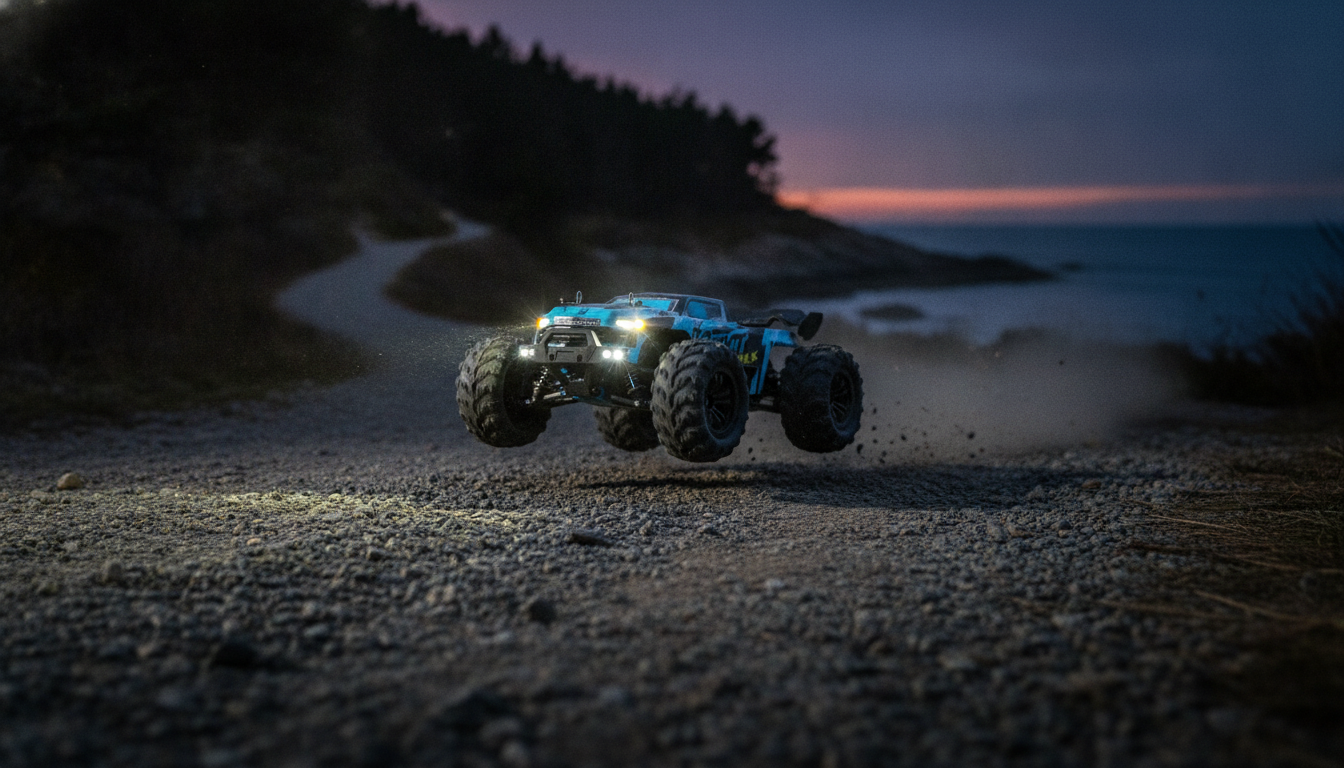
High-Speed Brushless 4WD RC Car (80 km/h) for Off-Road Drifting and LED Night Runs
A brushless 4WD RC car built for fast launches, controlled slides, and confident handling across mixed terrain. The combination of high top speed, four-wheel traction, and LED lighting makes it suited for daytime bashing and after-dark drift sessions with better visibility and style. If you want one platform that can rip straight-line passes, carve corners, and still kick the tail out on command, this setup checks a lot of boxes without feeling “one-trick.”
What Makes This RC Car Different
This 4WD brushless platform is designed for drivers who like variety—loose dirt one day, a smooth parking lot the next, and a quick night run when the sun drops. Brushless power delivers crisp acceleration with strong efficiency and reduced maintenance compared with many brushed setups, while 4WD traction helps keep the chassis settled when surfaces get sketchy.
- Brushless power delivery for strong acceleration, higher efficiency, and less wear-prone maintenance
- 4WD traction to help put power down on loose dirt, gravel, and short grass while staying stable at speed
- Drift-capable handling that can transition from grip to slide with throttle control and surface choice
- Integrated LED lights for better visibility and easier orientation at distance
- All-around focus for straight-line speed, cornering confidence, and playful drifting without swapping cars
For a deeper background on motor differences, RC Car Action’s resources are a helpful starting point: RC Car Action — RC Electric Motor Guide (Brushed vs. Brushless). For general RC terminology and beginner-friendly definitions, see: ARRMA — RC Glossary and Getting Started Resources.
Key Specs and Feature Checklist
On paper, this is an “80 km/h class” RC car—meaning it’s built with the power system and drivetrain concept to support high speed, though real-world results vary based on battery condition, surface grip, temperature, gearing, and how speed is measured.
- Top speed claim: up to 80 km/h (real-world speed varies by battery, surface, temperature, and tuning)
- Drivetrain: 4WD for more predictable corner exits and better stability under acceleration
- Motor type: brushless for stronger sustained performance across repeated runs
- Lighting: integrated LEDs for night running and improved line-of-sight
- Use cases: off-road running, drift practice on smooth surfaces, parking-lot racing, and speed passes in open areas
Quick Overview
| Feature | Why it matters | Practical tip |
|---|---|---|
| Brushless motor | More power and efficiency with less wear | Allow cool-down breaks between hard runs to protect electronics |
| 4WD drivetrain | Improves traction and stability on loose surfaces | Use gentler steering inputs at high speed to avoid traction roll |
| 80 km/h class speed | Enables speed runs and fast track laps | Choose large, open areas and check range before full-throttle passes |
| Off-road capable | Handles uneven ground better than on-road-only cars | Avoid deep water/mud unless the electronics are rated for it |
| LED lights | Better visibility and easier orientation | Run at dusk/night on well-known surfaces to reduce impacts |
Off-Road Performance: Traction, Stability, and Control
Off-road speed feels different than pavement speed. On dirt, the goal is often forward drive and predictability rather than absolute top-end. 4WD helps keep the car moving when one end unloads—especially on gravel, dusty hardpack, or patchy grass where the surface grip changes every few feet.
- 4WD forward bite: When the rear steps out or the front gets light, 4WD can still pull the car straight and keep momentum.
- Brushless punch: The benefit shows up clearly when accelerating out of corners or climbing slight inclines without bogging.
- Smooth inputs matter: At higher speeds, stability improves with steady throttle and small steering corrections (sudden snaps can flip grip to slide instantly).
- Best terrain match: Compact dirt, short grass, and light gravel where the tires can find bite without constant chassis bouncing.
- Go slower to go faster: On rough ground, slightly slower laps can be quicker overall because the car stays composed and tracks straighter.
Drift Setup and Driving Tips for Cleaner Slides
Drifting is easiest on smoother surfaces—sealed asphalt, polished concrete, or a clean parking lot—where the tires can break traction consistently. Because this is 4WD, the car often feels like it’s being “pulled” through the slide rather than simply pushing the rear around, so throttle balance and steering timing become the main tools.
LED Night Runs: Visibility, Safety, and Best Practices
Care, Maintenance, and Longevity
Is This the Right RC Car for You
Shop In-Stock Picks
- High-Speed Brushless 4WD RC Car 80KM/H Off-Road Drift Racing Car with LED Lights
- Lightweight Waterproof Down Tote Bag
- Sandalwood Backflow Incense Burner – Alpine Flowing Water Aromatherapy
FAQ
Does it really reach 80 km/h?
It can be capable of that speed under the right conditions, but the result depends on battery health, surface grip, temperature, gearing, and measurement method. Real-world numbers can be lower, and the safest way to confirm is with a GPS speed meter in a large, open area.
Can it drift well on pavement and still handle dirt?
Yes—drifting is easiest on smooth pavement where traction breaks consistently, while dirt performance benefits from 4WD and appropriate off-road tires. For best results, use separate tires or a dedicated setup for drifting versus off-road running when possible.
Are the LED lights bright enough for night driving?
LEDs help you keep orientation and track the car’s direction, but they don’t replace lighting for the driving area. Night runs are safest on familiar, obstacle-free surfaces with clear boundary markers.















Leave a comment