86.6″ Wooden Dog Crate Furniture with Shelves & Divider
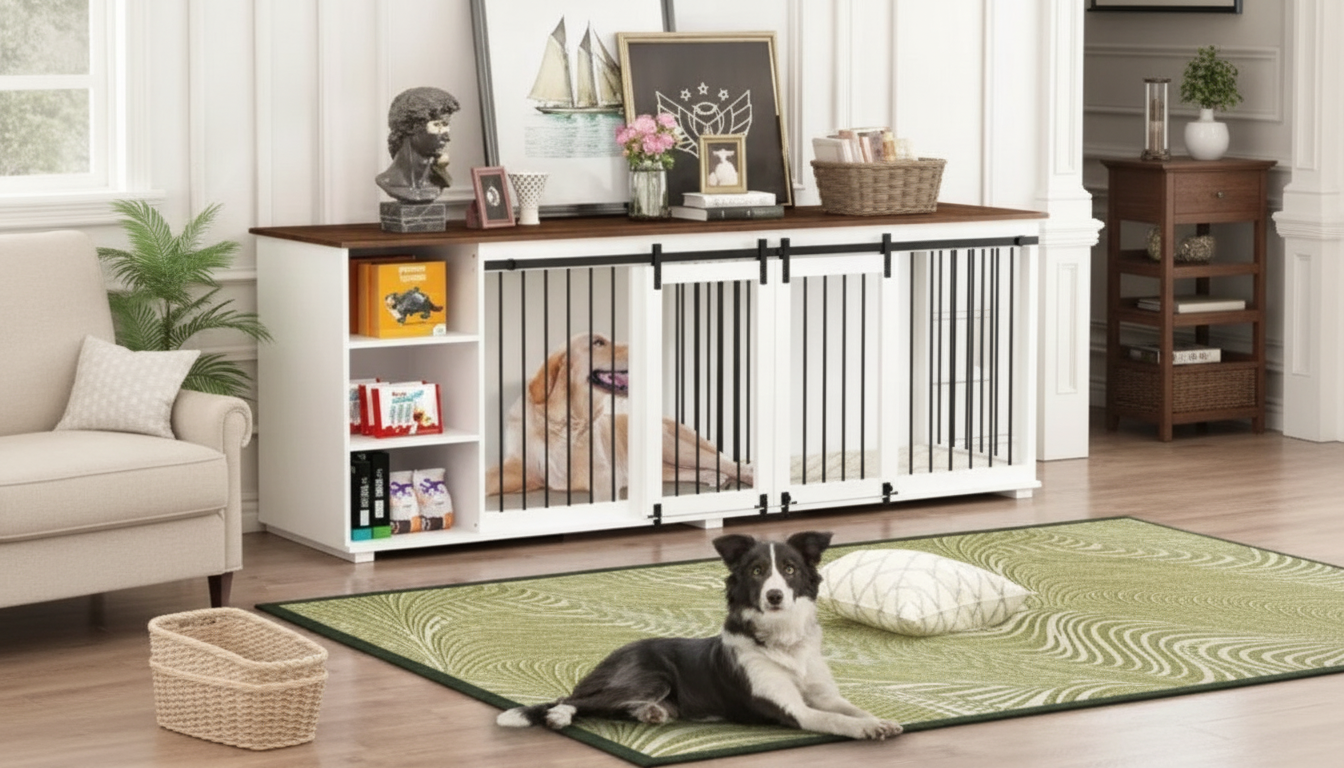
Large Wooden Dog Crate Furniture with Shelves, Divider & Sliding Door: A Room-Ready Kennel for Big Dogs
A large dog crate doesn’t have to look like a temporary solution. A furniture-style wooden kennel with a sliding door, divider panel, and built-in shelving can create a dedicated dog space that fits into a living room or open-plan layout while keeping daily essentials organized and easy to reach. The result is a calmer routine: one consistent “place” for your dog, plus a tidy spot for the gear that usually ends up on countertops and entryway tables. For more guidance, see Dog Crate Furniture | Indoor Portable Pet Crates | Easy Assembly.
What Makes This Kennel Different
- Furniture-style wooden build designed to blend with home décor rather than stand out like a wire crate
- Extra-long footprint suited to larger breeds or households that want a more spacious setup
- Sliding door helps reduce swing clearance issues in tighter rooms and high-traffic walkways
- Internal divider enables separation for rest, feeding, or introducing a second dog gradually
- Integrated shelves keep leashes, treats, grooming tools, and towels in one place
Instead of treating containment and styling as a trade-off, this type of kennel acts more like a “dog station.” It can sit where the family actually spends time—without turning the room into a training area.
Best-Fit Homes, Dogs, and Use Cases
- Apartments or open-plan spaces where a conventional crate feels visually intrusive
- Large-breed households that want a dedicated “dog station” with storage for supplies
- Multi-dog routines: divider can support short-term separation, rotating rest time, or calmer transitions
- Entryway or living room setups where a sliding door avoids blocking pathways
- Owners who prefer a contained area for downtime without isolating the dog from family activity
Placed thoughtfully, a furniture-style kennel can support the everyday moments when dogs tend to get overstimulated—doorbells, deliveries, dinner prep, or guests arriving—while still letting them feel included.
Size, Layout, and Placement Planning
Before ordering a large wooden kennel, planning the footprint pays off. Unlike collapsible crates, furniture-style units are meant to live in one spot, so it helps to choose a location where access, airflow, and day-to-day movement all make sense.
- Measure the intended wall span and verify the kennel length fits without crowding outlets, vents, or baseboards
- Leave room for the sliding door to travel freely and for hands to access latches and handles
- Confirm interior space supports the dog standing up, turning around, and lying down comfortably
- Plan shelf access: allow clearance above and beside the unit for daily grab-and-go items
- Choose a spot away from direct heat/AC blasts and out of constant foot traffic to support calm rest
Quick room-planning checklist
| Planning item | What to verify | Why it matters |
|---|---|---|
| Wall length | Unit fits without blocking doors/windows | Prevents congestion and awkward placement |
| Door clearance | Sliding track area stays unobstructed | Keeps daily open/close smooth and quiet |
| Dog comfort | Enough interior room to turn and stretch | Supports relaxation and safer containment |
| Shelf reach | Frequently used items are accessible | Makes routines faster and more consistent |
| Noise/temperature | Away from vents and heavy traffic | Helps reduce stress and over-arousal |
Divider, Shelves, and Sliding Door: How They Help Day to Day
- Divider panel supports gradual introductions or short, supervised separation without relocating one dog to another room
- Shelves can store training treats, puzzle toys, waste bags, grooming wipes, and spare collars to reduce clutter
- Sliding door can be easier in narrow hallways and may be less startling than a swinging door in tight spaces
- A consistent “place” near family activity can help dogs settle during meals, visitors, or noisy moments
- Organization improves follow-through: when tools are visible and reachable, training and routines happen more reliably
If you’re working on crate training or refreshing the basics, guidance from established organizations can help you keep sessions positive and predictable. Helpful references include the American Kennel Club’s crate training overview and the Humane Society’s crate training tips.
Comfort and Safety Setup
Care, Cleaning, and Long-Term Durability
Product Snapshot
Featured option
Helpful add-ons (in stock)
- Lightweight Waterproof Down Tote Bag — an easy carry option for training gear, towels, or travel essentials
- Enrichment Ideas for Indoor Cats | Printable Cat Enrichment Guide — useful if you’re balancing dog routines with indoor pet enrichment at home
At-a-glance details
| Detail | Value |
|---|---|
| Product name | Large Wooden Dog Crate Furniture, 86.6″ Kennel with Shelves, Divider & Sliding Door |
| Primary features | Shelves, divider panel, sliding door |
| Format | Furniture-style wooden kennel |
| Availability | In stock |
| Price | 494.47 USD |
FAQ
Is a sliding door better than a swinging door for a large dog crate?
A sliding door can be a better fit in tight rooms because it doesn’t swing into walkways or require extra clearance. It also helps avoid bumping into people (or pets) in high-traffic spots, but it’s important to periodically confirm the track stays smooth and the latch closes securely.
How should the divider be used for one dog versus two dogs?
For one dog, a divider can create a smaller, more structured rest zone when appropriate, especially during training and routine downtime. For two dogs, it can support short, supervised separation or gradual introductions, but incompatible dogs shouldn’t be left unsupervised on either side of the divider.
How can a wooden kennel be kept clean and odor-free?
Use washable pads or liners to catch fur and dirt, and wipe wood surfaces with a pet-safe cleaner followed by quick drying to protect the finish. Regular laundering and consistent ventilation are key to preventing odor buildup over time.











Leave a comment