Mechanical Keypad Door Lock: Battery-Free Keyless Entry
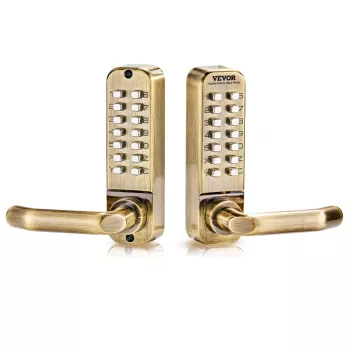
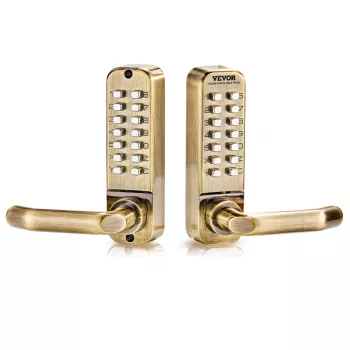
Mechanical Keyless Entry Door Lock with 14-Key Mechanical Keypad Handle
A mechanical keypad handle lock delivers keyless access without batteries, apps, or Wi‑Fi. That makes it a practical choice for rentals, side doors, workshops, detached buildings, and any entry that sees frequent use. With a purely mechanical keypad, access stays consistent during power outages and cold snaps, while a keyed override keeps a traditional backup option available.
What a Mechanical Keypad Handle Lock Is
A mechanical keypad handle lock uses physical button presses to move internal linkages that retract the latch. Because there are no motors, circuit boards, or wireless modules, operation depends on the quality of the mechanism and the accuracy of the door’s alignment—not on battery life or signal strength.
- Keypad buttons drive an internal mechanical mechanism to retract the latch—no electronics required.
- Many models use a multi-button code concept (often allowing several buttons to be pressed in any order, depending on design).
- Ideal where battery maintenance is undesirable: outbuildings, storage rooms, rental turnovers, and cold climates.
- A keyed override provides backup access if the code is forgotten or the mechanism is obstructed.
Who It Fits Best (And When to Choose Something Else)
Mechanical keypad locks tend to shine in “set it and forget it” situations where simple shared access matters more than connectivity features.
- Good fit: landlords needing simple turnover access, families wanting shared entry without phone dependence, garages/workshops where dirt and temperature swings are common.
- Good fit: doors where Wi‑Fi is unreliable or prohibited (some commercial sites, detached buildings).
- Consider alternatives: doors requiring audit trails, schedules, remote unlock, or integration with smart home systems.
- Consider alternatives: high-security applications needing certified hardware and professional master keying.
Key Features to Look For
Mechanical doesn’t mean “one-size-fits-all.” Small fit and finish differences can determine whether the lock feels smooth for years or becomes fussy after one season.
- Mechanical keypad layout: raised buttons that are easy to press with gloves and resist jamming from dust.
- Code capacity and management: ability to change the code without removing the entire lock (varies by design).
- Keyed cylinder quality: smooth operation, compatible keyway availability, and rekey options if supported.
- Door handing and orientation: confirm compatibility with left-hand/right-hand doors and whether it’s reversible.
- Backset and bore compatibility: measure first to match common residential door prep.
- Weather exposure: for exterior use, look for corrosion-resistant finishes and a sealed keypad area.
Quick Checklist Before Ordering
| Item to verify | What to measure/check | Why it matters |
|---|---|---|
| Door thickness | Measure the door edge-to-edge thickness | Locks fit only certain thickness ranges; wrong fit causes loose trim or binding |
| Backset | Distance from door edge to center of bore hole | Mismatch prevents latch alignment and smooth closing |
| Bore and latch prep | Confirm standard bore hole and edge hole sizes | Avoid drilling surprises and weak installs |
| Handing/reversibility | Check whether the handle is adjustable for left/right swing | Prevents upside-down or non-functioning lever orientation |
| Exterior exposure | Direct rain/salt air vs covered entry | Finish and internal parts need corrosion resistance outdoors |
Installation Overview (Tools and Steps)
Most mechanical keypad handle sets install like a standard lever lockset. The biggest difference is taking extra care to prevent binding, since the keypad’s mechanical linkages rely on smooth, consistent movement.
- Typical tools: screwdriver, tape measure, pencil; occasionally a drill for minor alignment.
- Remove the existing handle/lockset and clean the bore holes; check for wood damage around the latch area.
- Install the latch and ensure the bevel faces the correct direction for the door swing.
- Mount the keypad exterior assembly, route the spindle/through-bolts, then attach the interior assembly.
- Test latch retraction and door closing before tightening fully to avoid binding.
- After install, confirm the handle returns smoothly and the latch fully extends into the strike.
If the door is older or has sagging hinges, correcting alignment can matter as much as the lock itself. For performance standards and grading references when evaluating door hardware, consult BHMA and certification resources such as UL Solutions.
Setting a Code That Stays Reliable
Mechanical keypads are durable, but they’re also tactile—meaning repeated use can polish or wear specific buttons. A thoughtful code reduces pattern wear and lowers the chance of easy guesses.
Everyday Use, Maintenance, and Troubleshooting
Safety and Compatibility Notes
Product Spotlight: Mechanical Keyless Entry Door Lock with 14-Key Mechanical Keypad Handle
If the goal is dependable keyless entry without battery checks or app setup, the Mechanical Keyless Entry Door Lock with 14 Key Mechanical Keypad Handle is built around a mechanical keypad that keeps access consistent during power outages. A keyed backup supports emergency entry or situations where the code isn’t available.
Optional Add-On for Tool Organization
For installs across multiple doors or rental turnovers, keeping screws, strike plates, and small tools together saves time. The Lightweight Waterproof Down Tote Bag can serve as a simple carry-all for hardware and a spare key set during changeovers.
FAQ
Does a mechanical keypad door lock need batteries?
No—most mechanical keypad locks work through internal mechanical linkages, so they typically don’t require batteries. Models that add electronic features (like remote access or illuminated keypads) may require power, but purely mechanical designs do not.
Can the code be changed without replacing the lock?
Many mechanical keypad locks allow the code to be changed using an internal procedure, often accessed from the interior side of the door. Always follow the specific model’s instructions, then test the new code repeatedly with the door open and closed.
Why does the latch work when the door is open but not when it’s closed?
This is commonly caused by strike misalignment, door sagging, or binding from an over-tightened installation. Check that the latch bevel faces the correct direction, confirm the strike plate opening lines up cleanly, and adjust the strike or hinges as needed.








Leave a comment