Futuristic Marble Run Puzzle Guide: Build, Tune, Replay
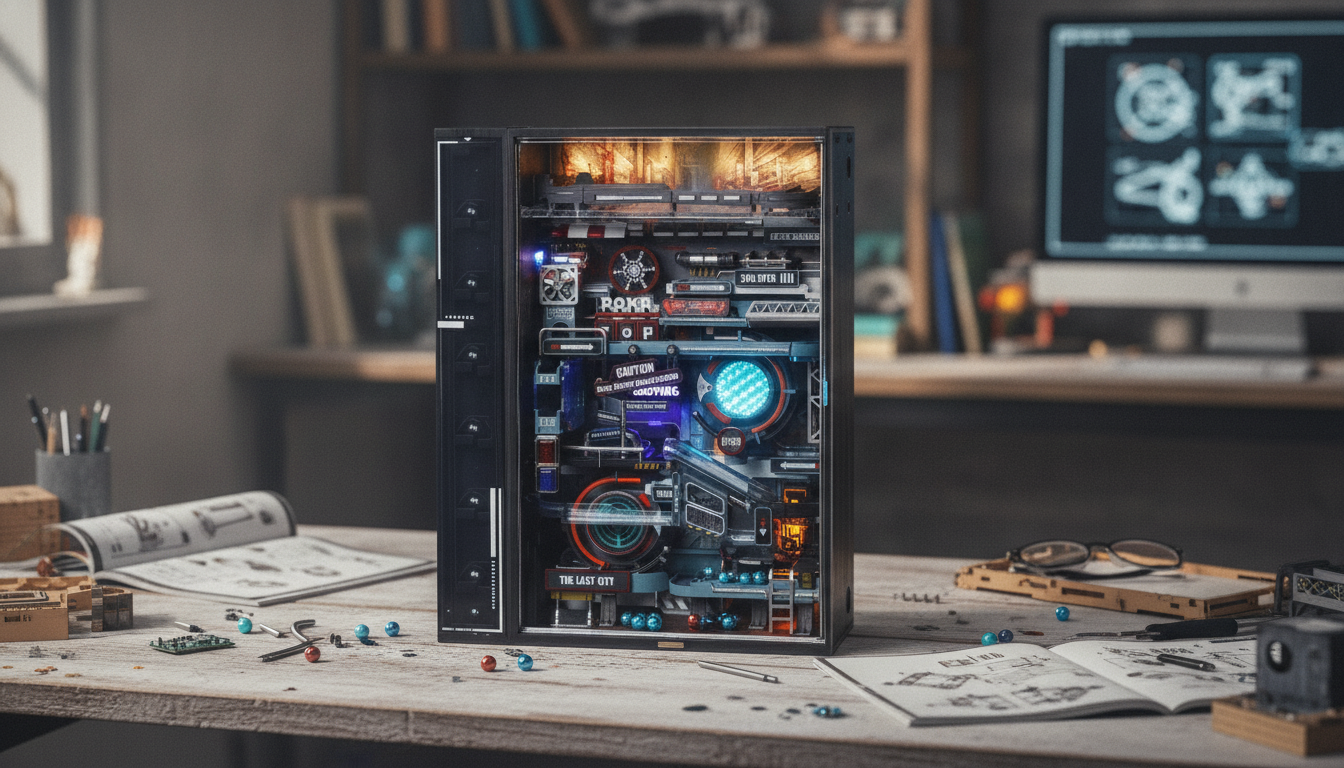
Futuristic Marble Run Puzzle: Build, Tweak, and Watch the Chain Reaction
A futuristic marble run puzzle turns motion, gravity, and clever engineering into a hands-on build that looks like kinetic art once it’s running. The fun isn’t only in the first assembly—these sets invite you to fine-tune angles, re-seat joints, and experiment with flow until the run feels fast, smooth, and satisfyingly “machine-like.” Whether it’s for a family build night or a focused desk project, a well-tuned marble run rewards patience with a clean chain reaction you’ll want to replay.
What makes a marble run feel futuristic
Classic marble runs are often colorful and toy-like. A futuristic marble run puzzle leans into a mini-mechanical aesthetic—more “desktop device” than “playroom track.” That vibe usually comes from a few key traits:
- Sleek, mechanical styling: Panels, structural frames, and a cohesive look that resembles a compact machine.
- Interactive modules: Switches, lifts, spirals, junctions, and gates that split paths and create decision points.
- Performance depends on micro-adjustments: Alignment, slope, and friction determine whether the marble glides or stalls.
- Display value: Many builds look sharp enough to leave assembled on a shelf, console table, or desk.
- A strong “build + payoff” loop: You troubleshoot like a puzzle, then enjoy the run like kinetic art.
That cause-and-effect satisfaction is rooted in basic physics—gravity converts potential energy into motion, and every curve and joint decides how efficiently the marble keeps rolling. If you want a quick refresher on the concept behind the motion, Encyclopaedia Britannica’s overview of gravity is a helpful reference.
Who it’s best for
Futuristic marble run puzzles are flexible: they can be a serious build for tinkerers or a shared project that turns into a family “let’s tweak it again” tradition.
- Gift-ready for builders: Ideal for anyone who likes puzzles, model kits, and mechanical gadgets.
- Great for family builds: One person can assemble modules while another tests and tunes for smoother flow.
- STEM-style play: A practical way to explore speed, friction, and cause-and-effect without feeling like homework.
- Screen-free downtime: Especially satisfying for teens and adults who enjoy tactile projects.
- Perfect for desk breaks: Short runs reset fast, so you can run a few cycles and get back to your day.
What’s usually inside the box
Exact contents vary by design, but most futuristic marble run puzzle sets include a mix of structural components, track pieces, and “action” modules that create the chain reaction.
- Track and structure pieces: Connectors, ramps, drops, curves, and supports that form the main route.
- Action modules: Funnels, splitters, gates, spirals, elevators, and return paths (module mix varies by set).
- Marbles: Typically uniform-sized for consistent rolling; clean marbles tend to perform better.
- Illustrated instructions: Usually a recommended “first build” plus optional variations.
- Decorative panels: Common in sci-fi styled sets to reinforce the machine-like look.
If the set will be used around younger kids, remember that marbles and small parts can be a choking hazard. The U.S. Consumer Product Safety Commission provides clear guidance on small parts and choking hazard evaluation.
How to build it so it runs smoothly
The first build is where most “my marble keeps stopping” frustration happens—usually because the structure is slightly off-level or a joint is not fully seated. A smooth run is less about force and more about consistency.
Tuning tips for faster, quieter, cleaner runs
Common issues and quick fixes
| Problem | Likely cause | Quick fix |
|---|---|---|
| Marble stops mid-track | Low slope or friction at a joint | Re-seat connectors; increase slope slightly; clean the track |
| Marble jumps off in a turn | Too much speed or abrupt curve | Add a longer lead-in; reduce drop height before the turn |
| Frequent jams at a gate/switch | Misalignment or inconsistent marble speed | Rebuild that module; ensure stable supports; test with one marble |
| Wobbly tower | Uneven surface or weak support spacing | Move to a hard, level surface; add supports; lower top-heavy sections |
Safety, age range, and where to set it up
Futuristic Marble Run Puzzle: highlights and what to expect
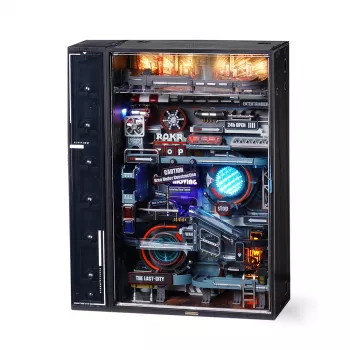
If you want a build that feels like a compact engineering project and ends as a displayable kinetic piece, the Futuristic Marble Run Puzzle is designed for exactly that: assemble, test, tweak, then enjoy the chain reaction once everything is dialed in. Expect your best results after the first round of tuning—especially on joints, slopes, and tower stability.
If you’re setting up a dedicated build space, a few extras can make the experience neater and more relaxing. A structured carry-all like the Lightweight Waterproof Down Tote Bag can help keep modules and marbles together between sessions, and a calm desk ambiance pairs well with a visual build—consider the Sandalwood Backflow Incense Burner – Alpine Flowing Water Aromatherapy for a soothing background while you tune and test.
FAQ
Is a marble run puzzle difficult to assemble?
Difficulty depends on the part count and how many action modules are included, but most builders do best by assembling in stages and testing each section as they go. Using a level surface and expecting a little tuning after the first run makes the process much smoother.
Why do marbles get stuck or fall off the track?
The most common causes are misaligned joints, inconsistent slope, dust-related friction, or too much speed going into a tight turn. Re-seat connectors, clean the track, and adjust drop height or add a gentler lead-in to problem curves.
Is it suitable as a gift for teens or adults?
Yes—these sets work well as a hands-on project that also looks great on display once assembled. They’re especially satisfying for puzzle and model-kit fans, and they offer screen-free downtime; for younger kids, adult supervision is important due to small parts.













Leave a comment