Indoor Cat Enrichment: DIY Toys, Play & Home Setup
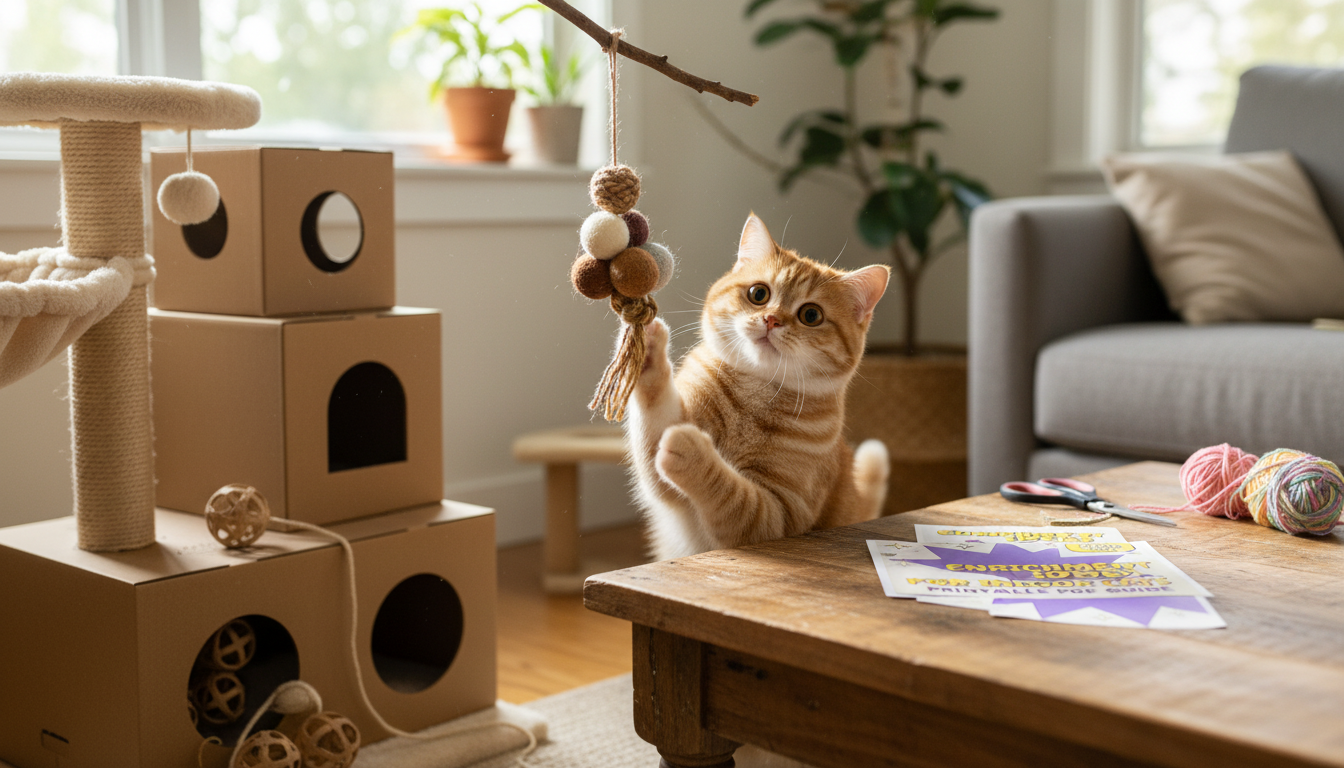
Indoor cats thrive when their day includes hunting-style play, problem-solving, movement, and safe places to climb and rest. With a few simple activities—many made from items already at home—you can support calmer behavior, a healthier weight, and fewer boredom habits like counter-surfing or late-night zoomies.
Why enrichment matters for indoor cats
Enrichment isn’t “extra”—it’s how an indoor environment can meet a cat’s built-in needs. Cats are wired to stalk, pounce, climb, scratch, and investigate scent trails. When those outlets are missing, stress and frustration can show up as unwanted scratching, over-grooming, waking you up at night, or pestering for food.
Well-chosen enrichment also strengthens your relationship. Short, structured play sessions (followed by a small reward) create predictable, positive interaction that can boost confidence in shy cats and give energetic cats a clear “job” to do. For more detailed guidance on a cat’s environmental needs, see the American Association of Feline Practitioners (AAFP) guidelines and International Cat Care’s enrichment advice.
Quick enrichment menu (mix-and-match by time and energy level)
Some days you have 3 minutes; other days you can do a full play-and-puzzle routine. Rotating small activities keeps novelty high without turning enrichment into a big project.
Fast picks by session length
- 1–5 minutes: wand teaser chase, treat scatter in a small area, quick clicker cue (sit/touch), peek-a-boo with a blanket edge
- 5–10 minutes: “hunt the toy” around furniture, short hallway fetch, paper-bag exploration (handles removed), window-watch session with a perch
- 10–20 minutes: puzzle feeder session, scent trail with tiny treats, obstacle course with boxes and cushions, supervised harness practice
- Low-mobility options: lick mat with wet food, gentle toy drag on the floor, target training to a mat, brushing as a calm routine (only if your cat enjoys it)
| Need | Signals | Ideas |
|---|---|---|
| More movement | Restlessness, weight gain, constant meowing for attention | Two short wand-play sessions daily; hide-and-seek toy chases; stair/sofa up-down games |
| More hunting/foraging | Begs for food, eats too fast, raids counters | Puzzle feeders; kibble scatter; treat trail; “find it” in crumpled paper |
| More vertical territory | Guards doorways, conflicts with other pets, avoids floor traffic | Cat tree by a window; wall shelves; top-of-bookcase bed; clear paths between high spots |
| More calm/comfort | Startles easily, hides often, over-grooms | Covered bed; predictable play-then-feed routine; quiet retreat zone |
| More scratching outlets | Scratches furniture, rugs, door frames | Vertical sisal post near sleeping area; horizontal scratcher near play zone; reward for using scratchers |
DIY toys from household items (safe and satisfying)
DIY toys work best when they’re simple, durable, and easy to retire the moment they fray. Introduce one new item at a time for timid cats, and supervise anything that could be chewed.
- Box maze: Connect 2–4 boxes with doorway cutouts. Rotate the layout weekly to keep novelty high.
- Paper “prey”: Crumple plain paper into a ball and toss short distances. Stop if your cat starts eating paper.
- Sock kicker: Fill a sock with tightly packed fabric scraps and knot the end. Supervise and discard if it frays.
- Toilet-roll treat puzzle: Fold the ends, cut a few small holes, and add a few treats. Start easy, then increase the challenge.
- Ribbon-free wand alternative: Tie a strip of sturdy fabric to a dowel. Avoid thin strings or yarn that can be swallowed.
- Safety checks: Remove staples and tape edges; avoid small detachable parts; supervise new toys; discard damaged items.
Play routines that match a cat’s natural cycle
A simple rhythm makes play more satisfying and can reduce evening chaos: play (hunt) → small meal or treat (eat) → calm time (groom/sleep). Many cats settle more easily when they get a complete “catch,” not an abrupt stop.
- Aim for 2 short sessions daily (morning and evening). High-energy cats may benefit from a third mini-session mid-day.
- Build intensity: start slow (stalk), increase speed (chase), add a few vertical jumps, then let your cat “catch” the toy.
- End intentionally: offer a final capture and a small reward so frustration doesn’t carry into the night.
- Rotate toys: keep 2–4 out and store the rest; swap weekly to renew interest.
- Adjust for age: kittens often prefer more frequent short bursts; seniors usually do better with gentle, lower-impact play near the floor.
Food enrichment without overfeeding
Food puzzles are most effective when they replace part of the daily ration rather than add extra calories. Measure your cat’s daily total, then “spend” some of it through foraging.
Cat-friendly home setup: vertical space, scratch zones, and quiet retreats
A printable plan to make it easy to stay consistent
If you’d like a ready-to-use format, see the internal resource here: Printable cat enrichment guide with DIY toys and play routines. For a simple way to keep enrichment supplies together (toys, treats, clicker), a dedicated organizer can help: Lightweight Waterproof Down Tote Bag.
FAQ
How much play does an indoor cat need each day?
Most adult cats do well with two short interactive sessions daily (about 5–15 minutes each), adjusted for age, health, and energy level. Ending with a small meal or treat helps complete the “hunt-eat-rest” cycle.
What are safe DIY toys for cats?
Cardboard boxes, crumpled paper balls, paper-bag exploration (handles removed), and supervised treat puzzles made from toilet rolls can work well. Avoid stringy materials, small detachable parts, and anything your cat chews and swallows.
How can enrichment help with nighttime zoomies?
Use a predictable evening routine: active play that ends with a full “catch,” followed by a small meal, then a calmer environment. Adding daytime foraging and movement also helps shift energy use earlier.
















Leave a comment